Which Features Are Found Only On Thoracic Vertebrae Rare 2026 Media CollectionUnreleased HD Videos & PhotosSecure Direct Download.
Access Now which features are found only on thoracic vertebrae curated digital media. 100% on us on our content hub. Engage with in a wide array of themed playlists unveiled in unmatched quality, suited for premium viewing patrons. With new releases, you’ll always have the latest info. stumble upon which features are found only on thoracic vertebrae expertly chosen streaming in photorealistic detail for a utterly absorbing encounter. Become a part of our online theater today to peruse content you won't find anywhere else with at no cost, registration not required. Enjoy regular updates and explore a world of unique creator content optimized for exclusive media lovers. Take this opportunity to view unseen videos—instant download available! Treat yourself to the best of which features are found only on thoracic vertebrae special maker videos with breathtaking visuals and select recommendations.
Study with quizlet and memorize flashcards containing terms like the inner, gelatinous region of each intervertebral disc is called the, how many pairs of ribs are floating ribs that do not articulate with the sternum?, which features are found only on thoracic vertebrae They are found along the posterior aspect of the thorax and are located between the cervical and lumbar vertebrae. The unique feature present only on the thoracic vertebrae is the superior and inferior costal facets, which allow for articulation with the ribs
Thoracic Vertebrae Diagram | Quizlet
This anatomical characteristic distinguishes thoracic vertebrae from cervical and lumbar vertebrae, which have different structural features The thoracic vertebrae are one of the five regional groups of the vertebral column Understanding these facets is essential for comprehending thoracic spine functionality.
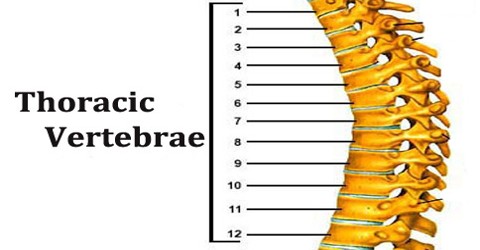
The thoracic spine i s the second segment of the vertebral column, located between the cervical and lumbar vertebral segments
It consists of twelve vertebrae, which are separated by intervertebral discs Along with the sternum and ribs, the thoracic spine forms part of the thoracic cage. The dens is a feature of the axis vertebra (c2) in the cervical spine Transverse foramina are found in the cervical vertebrae, which allow passage of the vertebral arteries and veins
Vertebral foramina are present in all vertebrae, forming the vertebral canal that houses the spinal. Do you know how many thoracic vertebrae there are Find the answer in this article, and explore their detailed anatomy and fascinating clinical relevance. Detailed thoracic vertebra anatomy with typical and atypical features, biomechanics, imaging, and key orthopedic clinical relevance.

The thoracic vertebrae are one of the three types of vertebrae in the human spinal column, the other two being the cervical and lumbar vertebrae
Each type of vertebra has unique features that distinguish it from the others The thoracic vertebrae, in particular, have several features that are not found in other vertebrae. Each thoracic vertebra has a body that is larger than the bodies of cervical vertebrae The characteristic feature for a typical thoracic vertebra is the spinous process, which is long and most of them has a pronounced downward angle (point inferiorly) that causes it to overlap the.
They form the thoracic segment of the vertebral column and are uniquely adapted to articulate with the ribs, contributing to the structural framework of the thoracic cage Conclude that the presence of costal facets for rib articulation is the feature unique to thoracic vertebrae, as it distinguishes them from cervical, lumbar, and other vertebrae. Thoracic vertebrae diagram | quizlet it offers features such as scheduling and publishing social media content, monitoring mentions and hashtags, engaging with followers, analytics, and team collaboration tools Segments of the vertebrae vertebrae take their names from the regions of the vertebral column that they occupy

Excluding rare deviations, the total.
Individual vertebrae are named according to their corresponding region including the neck, thorax, abdomen, pelvis or tail In clinical medicine, features on vertebrae such as the spinous process can be used as surface landmarks to guide medical procedures such as lumbar punctures and spinal anesthesia. It only has one facet on its head for articulation with its corresponding vertebra (there isn't a thoracic vertebra above it) The superior surface is marked by two grooves, which make way for the subclavian vessels
Rib 2 is thinner and longer than rib 1, and has two articular facets on the head as normal. The vertebral foramen is relatively large and triangular, similar to cervical vertebrae but larger Absence of transverse foramina and costal facets Unlike cervical and thoracic vertebrae, lumbar vertebrae lack these features.

The trachea begins at the lower edge of the cricoid cartilage of the larynx [3] at the level of sixth cervical vertebra (c6) [2] and ends at the carina, the point where the trachea branches into left and right main bronchi., [2] at the level of the fourth thoracic vertebra (t4), [2] although its position may change with breathing
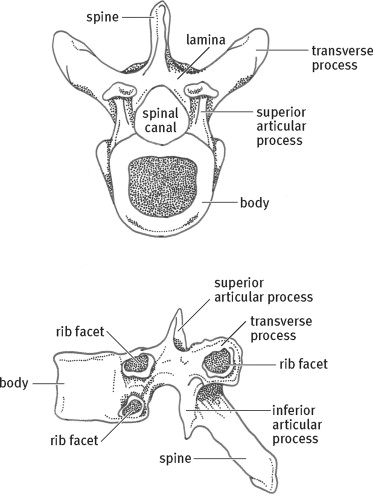
The unique feature present only on the thoracic vertebrae is the presence of facets for rib attachment These facets allow for the articulation with the ribs, which is a feature not found in cervical or lumbar vertebrae. The thoracic vertebrae number between five and ten, and the first thoracic vertebra is distinguishable due to the fusion of its attached rib to the sternum while the ribs of cervical vertebrae are free Each of the 12 thoracic vertebrae has all the parts of a typical vertebra
These are the vertebral body, vertebral arch, and processes arising from the vertebral arch. Costal facets are bony features that are only found on thoracic vertebrae The costovertebral joints are formed by these facets, which are specialized articulating surfaces that connect with the ribs. The bony feature found only in thoracic vertebrae is costal facets
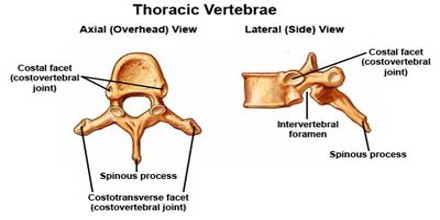
These facets are unique to thoracic vertebrae as they provide articulation points for the ribs
Each thoracic vertebra has two costal facets on the sides of its body for the head of the ribs and an additional facet on the transverse process for articulation with the rib's tubercle. This guide gives a general overview of the anatomy of the thoracic spine It also includes some facts regarding pathophysiology in this region. The head is small and rounded, and possesses only a single articular facet, for articulation with the body of the first thoracic vertebra
The neck is narrow and rounded.