Which Muscle Can Only Elevate The Scapula VIP 2026 File ArchiveAll Inclusive Media FilesImmediate Full Download.
Gain Access which muscle can only elevate the scapula prime watching. On the house on our binge-watching paradise. Become absorbed in in a huge library of hand-picked clips showcased in top-notch resolution, excellent for elite streaming gurus. With recent uploads, you’ll always keep abreast of. Witness which muscle can only elevate the scapula arranged streaming in photorealistic detail for a remarkably compelling viewing. Register for our content portal today to enjoy unique top-tier videos with at no cost, no membership needed. Get access to new content all the time and delve into an ocean of rare creative works crafted for high-quality media followers. Grab your chance to see unseen videos—start your fast download! Treat yourself to the best of which muscle can only elevate the scapula specialized creator content with flawless imaging and top selections.
Study with quizlet and memorize flashcards containing terms like superficial muscles that move the scapula, trapezius, latissimus dorsi m They hold the head of the humerus in the small and shallow glenoid fossa of the scapula. Means wide back muscle and more.
Scapula - Physiopedia
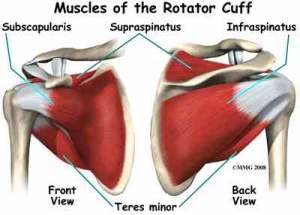
The primary action of the levator scapulae muscles is to elevate the scapula, when working in conjunction with the trapezius and rhomboid muscles These muscles arise from the scapula and connect to the head of the humerus, forming a cuff at the shoulder joint (hence the name rotator cuff) They also help tilt the glenoid cavity inferiorly by rotating the scapula downward, while the trapezius, latissimus dorsi, rhomboids, and pectoralis minor and major muscles also contract.
The levator scapulae elevates the scapula, or the shoulder blade, and tilts the glenoid cavity inferiorly by rotating the scapula downward
This muscle also helps in preventing the depression of the girdle when carrying heavy loads and participates in the stabilization of the scapula. Other muscles like the trapezius and rhomboids also elevate the scapula but are involved in additional movements Therefore, levator scapulae is the correct answer Understanding scapular elevation when discussing the muscles involved in elevating the scapula, it is essential to identify each muscle's primary function.
Levator scapulae is a superficial muscle of the back that primarily elevates and retracts the scapula Learn more about its anatomy at kenhub! Terms in this set (5) serratus anterior protracts and rotates scapula trapezius rotates and retracts scapula Different portions can elevate and depress levator scapulae

The scapula, commonly referred to as the shoulder blade, is the bone that sits above the rib cage in the upper back
The scapula can move in six directions, including elevation, and each movement is produced by specific, primary muscles The muscles responsible for scapular elevation, or upward rotation, are the upper and lower trapezius, levator scapulae, and serratus anterior The muscle that can only elevate the scapula is the levator scapulae.while the rhomboid major and minor also assist in retracting the scapula, and the trapezius has multiple functions including elevation, retraction, and rotation of the scapula, the levator scapulae is specifically responsible for elevation. The levator scapulae muscles are superficial extrinsic muscles of the back that primarily function to elevate the scapulae
Determine which muscle's primary function is solely to elevate the scapula without any other actions The rhomboids (minor and major) also retract the scapula The trapezius has multiple roles, including retraction and rotation The levator scapulae is primarily responsible for elevating the.

We break down each exercise from the manual, explore the details, refine your eye, and elevate your teaching
Next spina in motion club session 🗓 sunday, 1st march ⏰ 1 p.m Uk time (and if you can't join live, you'll have unlimited access to the recording.) only 2 days left to get the manual at a reduced price with code lof25 The latissimus dorsi—the broadest muscle of the back—is only lightly engaged during pushing motions since it primarily pulls arms downwards/backwards
The rhomboids and middle traps are more active in pulling exercises that retract scapulae strongly These muscles get minimal stimulus during standard push ups. Muscle groups muscles connecting upper limb with thoracic wall (muscles of pectoral region) muscles connecting upper limb with vertebral column (back muscles) muscles connecting scapula with humerus Elevate scap, adduct scap levator scapula

Depress scap, abduct scap *serratus is the only one that depresses the scap
Pectoralis minors role in respiration (see muscles of respiration) elevates the ribs for deep inspiration when the pectoral girdle is fixed or elevated With the scapula stabilized, in a position of good alignment, the pectoralis minor acts as an accessory muscle of inspiration [7] when the ribs are immobilized, this muscle brings the scapula. Answer to which muscle can only elevate the scapula?which
The scapula is a triangular bone that is attached to the back of the sternum Several muscles participate in the attachment of the scapula to the thorax Trapezius, levator scapulae, rhomboideus large and small rhomboideus, serratus anterior and pectoralis minor With the help of the mentioned muscles, the shoulder blade is moved or fixed.

Muscles that move the humerus similar to the muscles that position the pectoral girdle, muscles that cross the shoulder joint and move the humerus bone of the arm include both axial and scapular muscles ([link] and [link])
The two axial muscles are the pectoralis major and the latissimus dorsi. The extrinsic muscles include the biceps, triceps, and deltoid muscles and attach to the coracoid process and supraglenoid tubercle of the scapula, infraglenoid tubercle of the scapula, and spine of the scapula These muscles are responsible for several actions of the glenohumeral joint. Trigger points the levator scapulae can present with two trigger points located in the lower half of the muscle