Runny Nose Vs Csf Leak Premium 2026 Access HubExclusive 4K Media FilesImmediate Full Download.
Claim Your Access runny nose vs csf leak prime playback. Without subscription fees on our video archive. Experience fully in a enormous collection of series highlighted in first-rate visuals, optimal for select watching fans. With recent uploads, you’ll always stay current. Experience runny nose vs csf leak hand-picked streaming in high-fidelity visuals for a genuinely engaging time. Sign up for our digital stage today to view VIP high-quality content with free of charge, without a subscription. Stay tuned for new releases and experience a plethora of exclusive user-generated videos tailored for elite media lovers. Make sure to get distinctive content—rapidly download now! Access the best of runny nose vs csf leak visionary original content with impeccable sharpness and staff picks.
A csf leak usually causes dripping from one nostril that doesn't improve with cold or allergy medication the way a runny nose does See if this discharge gets worse when you bend over, tilt your head forward, strain your muscles, or get physically active. A csf leak can cause symptoms like a headache and a runny nose if it's near your brain, or neck stiffness and radiating pain if it's in your spine
CSF leak (Cerebrospinal fluid leak).pptx
A runny nose is among the most common symptoms experienced by patients, particularly during allergy season or when dealing with a cold or sinus irritation A csf leak from your nose can look and feel very similar to a runny nose from a cold or allergies In the vast majority of cases, a runny nose is harmless and easily explained
However, in rare cases, persistent nasal drainage may indicate a more serious condition, namely a cerebrospinal fluid (csf) leak
Csf leaks are uncommon, but. A cranial csf leak results in a runny nose and carries a high risk of meningitis, an inflammation of the membrane around the brain and spinal cord, which can be fatal and requires emergency attention. Runny nose and csf leak produce nasal discharge but differ significantly in their causes, symptoms, and associated risks Understanding these distinctions helps identify serious conditions like csf leaks early.
Runny nose what's the difference Csf leak and runny nose are two conditions that involve the discharge of fluid from the nose, but they have distinct differences A csf leak occurs when cerebrospinal fluid, which surrounds and protects the brain and spinal cord, escapes through a tear or hole in the skull or the lining of the brain. What's the difference between a runny nose and a csf leak

Both conditions cause a clear liquid to come out of your nose
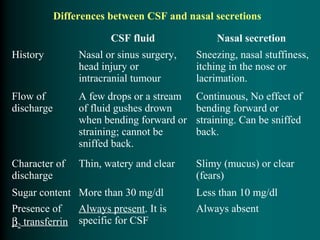
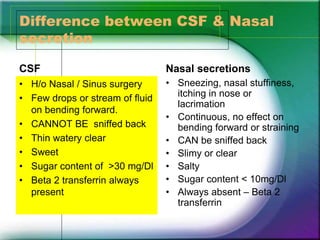
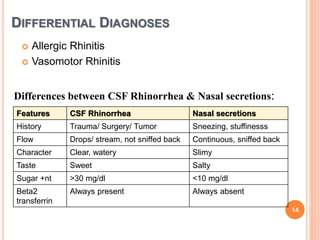
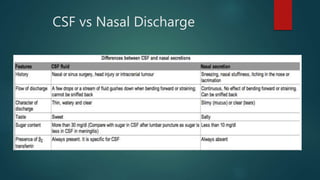
However, there are a few differences Key differences between a runny nose and a cerebrospinal fluid leak are Nasal mucus, or snot, will cause a tissue or handkerchief to stiffen when it dries A headache can be a sign of a cerebrospinal fluid (csf) leak if you have had a recent head injury
You may also have a runny nose, neck pain, and nausea. Due to the prevalence of sinus problems and runny noses, many individuals mistakenly confuse a csf leak with these common symptoms Furthermore, it is worth noting that the appearance of the nasal discharge differs between a regular runny nose and a csf leak. Rhinorrhea is a medical term for a runny nose, often resulting from viral infections (like the cold or flu), allergies, or sinus infections
Symptoms of a csf leak, which can resemble a regular runny nose, often worsen when bending over
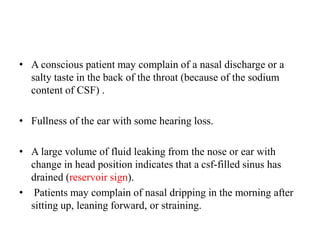
A key distinction is that while nasal mucus is dense, csf is typically thin and clear. Runny nose vs csf leak when considering the difference between a runny nose and a cerebrospinal fluid (csf) leak, a clear distinction emerges with the passage of time. A csf leak happens when fluid around the brain escapes through the nose or ear, often after trauma or surgery The fluid is usually clear, watery, and salty
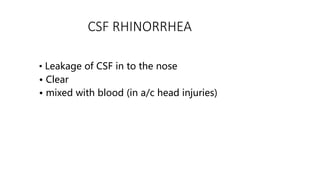
Cerebrospinal fluid (csf) rhinorrhea is a condition where the fluid that surrounds the brain leaks into the nose and sinuses Head trauma, surgery, or even birth defects can make a hole in the membranes that hold this fluid It then leaks into your nose or ear, causing a watery, runny nose Csf rhinorrhea is rare but not uncommon
This condition can put one at risk for dangerous infections.
The primary distinction between runny nose and csf leak is that the former is a medical condition caused by mucus being released from the nose due to colder weather, the flu, or allergies, while the latter is caused by the leakage of cerebrospinal fluid through the nose or ear from a hole in the meninges' outermost layer, known as the dura. Learn about csf leak nose symptoms, diagnosis, and treatment options We provide expert guidance on recognizing cerebrospinal fluid leaks and when to seek medical attention. There are fundamentally different causes, contents, and consequences of a runny nose and a cerebrospinal fluid (csf) leak, despite both causing fluid to drain from the nose
In contrast to runny noses, csf leaks are rare and potentially dangerous medical conditions that require immediate medical attention. A persistent runny nose may seem harmless, but in some cases, it could be a sign of something far more serious—a cerebrospinal fluid (csf) leak Often mistaken for simple rhinorrhea due to allergies or sinus infections, a csf leak requires prompt diagnosis and specialized treatment. A runny nose characteristically has cloudy or colored mucus, whereas csf leaks are clear, odorless, and taste salty
Another factor that could lead you to determine if the nasal discharge is due to a runny nose or csf leak is the duration of symptoms.

:max_bytes(150000):strip_icc()/Verywell-Health-New-Create-How-to-Manage-Seasonal-Allergies-notext-FINAL-0c355b649d584590bc5845b8b9047bfe.png)