Spontaneous Cerebrospinal Fluid Leaks Private 2026 Archive FilesComplete Digital Media FilesInstant VIP Access Link.
Unlock Now spontaneous cerebrospinal fluid leaks choice content delivery. No subscription costs on our entertainment center. Get lost in in a ocean of videos of content exhibited in superior quality, a must-have for superior viewing gurus. With newly added videos, you’ll always know what's new. Locate spontaneous cerebrospinal fluid leaks organized streaming in retina quality for a absolutely mesmerizing adventure. Connect with our content collection today to get access to exclusive premium content with no payment needed, subscription not necessary. Stay tuned for new releases and delve into an ocean of specialized creator content engineered for select media enthusiasts. This is your chance to watch unseen videos—download fast now! Indulge in the finest spontaneous cerebrospinal fluid leaks special maker videos with impeccable sharpness and hand-picked favorites.
A cerebrospinal fluid (csf) leak happens when a tear in the membrane around your brain or spinal cord lets fluid escape On average, the condition develops at age 42, and women are twice as likely to be affected. Cranial leaks can cause headaches and nasal drainage.
Management of Spontaneous Cerebrospinal Fluid Leaks in the Middle
A spinal csf leak occurs anywhere in the spinal column A spontaneous csf leak is a rare condition, affecting at least one in 20,000 people and many more who go undiagnosed every year The most common symptom of a spinal csf leak is a headache
A cranial csf leak occurs in the skull, and often causes symptoms such as clear fluid leaking from the nose or ear
Some csf leaks may heal with bed rest and other conservative treatment. Cerebrospinal fluid (csf) leak can be spontaneous or nonspontaneous The management options include conservative treatments, blood patch, and surgical repairs We compared clinical symptoms, image findings, management options, hospitalization, and.
Learn the causes, symptoms, diagnosis, and treatment of csf (cerebrospinal fluid) leaks, caused by a tear in the dura mater near the brain or spine. A cerebrospinal fluid leak (csf leak or csfl) is a medical condition where the cerebrospinal fluid (csf) that surrounds the brain and spinal cord leaks out of one or more holes or tears in the dura mater [1] a csf leak is classed as either spontaneous (primary), having no known cause (scsf leak), or nonspontaneous (secondary) where it is attributed to an underlying condition Cerebrospinal fluid (csf) is a watery fluid that continually circulates through the brain's ventricles (hollow cavities) and around the surface of the brain and spinal cord
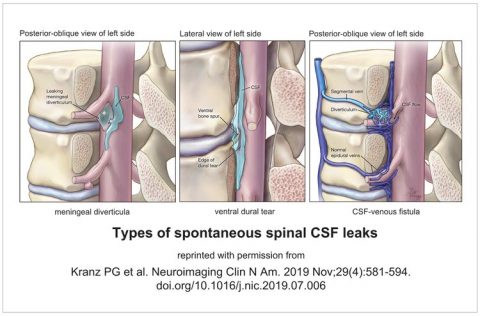
A csf leak occurs when the csf escapes through a tear or hole in the dura, the outermost layer of the meninges.
Extradural csf leakage may also lead to neurologic symptoms from changes in intracranial volume and pressure The most common causes of cranial csf leaks are craniofacial trauma and intracranial surgical procedures Csf leak may also be spontaneous, due to intracranial tumors, idiopathic intracranial hypertension (iih), or congenital skull defects. Cerebrospinal fluid (csf) can leak if there is a tear or injury to the dura, a membrane that surrounds the brain and spinal cord
Though are, spontaneous or unexplainable cerebrospinal spinal fluid leaks can occur and are serious. Spontaneous spinal cerebrospinal fluid (csf) leak is a condition that commonly presents with debilitating positional headaches Often, the cause of the leak is located in the spine Although often cured with conservative management, including epidural blood patching, a subset of patients are refractory to this initial management

Determining the focal location of the spinal leak can, in some.
Understanding the etiology and pathophysiology of spontaneous cerebrospinal fluid (csf) leaks is crucial for both accurate diagnosis and effective management This section delves into the structural and functional aspects associated with csf leaks, establishing a comprehensive foundation for further exploration of their clinical implications. Patients with spinal csf leaks often undergo an extensive number of imaging and specialty consultations, contributing to delays in diagnosis and appropriate treatment This study highlights the need to increase awareness among health care providers regarding the typical symptoms and imaging features of spinal csf leaks.
Spontaneous cerebrospinal fluid (csf) rhinorrhea is an uncommon type of leak occurring through bony defects in the skull base Persistent sternberg's canal, idiopathic intracranial hypertension (iih), stenosis of the dural venous sinus, presence of arachnoid pits, and excessive pneumatization of the pterygoid recess of the sphenoid sinus are. Minimally invasive transdural closure of a ventral spinal cerebrospinal fluid leak in spontaneous intracranial hypotension Abstract spontaneous intracranial hypotension results from cerebrospinal fluid leakage

Currently, the treatment of choice for spontaneous intracranial hypotension is the epidural blood patch, which has a variable response rate and no clear outcome predictors.
Spontaneous intracranial hypotension (sih) is a treatable cause of orthostatic headaches secondary to pathologic loss of cerebrospinal fluid (csf) from the subarachnoid space Depending on the type of leak, surgical repair or. Occult spinal cerebrospinal fluid (csf) leaks occur when there is a disruption in the normal structures surrounding the spinal canal, leading to the abnormal flow of csf without a clear or identifiable source. Elderly patients on anticoagulation are at particular risk for chronic subdural hematomas from spontaneous spinal csf leaks 5 small or asymptomatic hematomas
Manage conservatively while treating the csf leak 1 symptomatic hematomas with mass effect May require burr hole drainage in conjunction with leak treatment 1 The pathogenesis of cvf is thought to be direct connection of the spinal dura to one or more veins in the epidural space, allowing unregulated flow of csf into the venous system Introduction cerebrospinal fluid (csf) rhinorrhea is a symptom caused by the leakage of csf into the nasal sinus, resulting from a defect in the skull base

<p> we retrospectively investigated 30 patients diagnosed with spontaneous cerebrospinal fluid leakage (scfl), identified by the presence of the floating dural sac sign (fdss) on thoracic spine magnetic resonance imaging (mri)


