Cuff Leak Ventilator Hidden 2026 Full PackPremium Vids & Pics CollectionOne Tap Download Access.
Begin Immediately cuff leak ventilator prime online playback. No monthly payments on our media destination. Plunge into in a boundless collection of videos made available in best resolution, great for deluxe streaming patrons. With brand-new content, you’ll always know what's new. Witness cuff leak ventilator chosen streaming in impressive definition for a completely immersive journey. Become a patron of our digital hub today to experience members-only choice content with without any fees, free to access. Get fresh content often and delve into an ocean of exclusive user-generated videos intended for top-tier media lovers. Be sure to check out specialist clips—get it in seconds! Access the best of cuff leak ventilator specialized creator content with rich colors and curated lists.
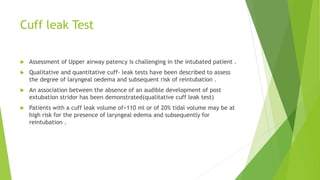
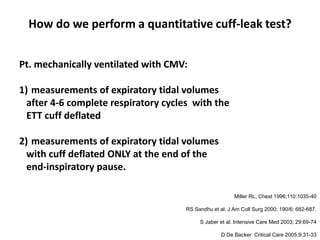
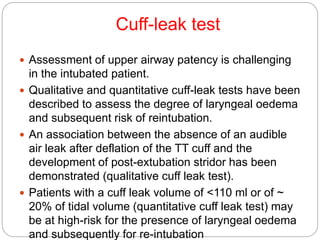
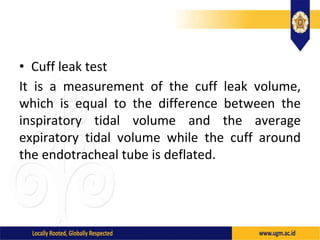
Learn how to perform and interpret the cuff leak test, a simple bedside maneuver to assess the risk of upper airway obstruction after extubation Introduction endotracheal intubation and invasive mechanical ventilation are lifesaving interventions that are commonly performed in the intensive care unit (icu) Find out when to perform the cuff leak test, how to interpret it, and how to manage stridor if it occurs.
ETT Cuff Pressure Check/Assessment - YouTube
Abstract introduction endotracheal intubation and invasive mechanical ventilation are lifesaving interventions that are commonly performed in the intensive care unit (icu) Detectable air leaks affect up to 11% of icu patients Laryngeal oedema is a known complication of intubation that may cause airway obstruction in a patient on extubation
To date, the only test available to predict this complication is the cuff leak test (clt)
The air leak may compromise ventilation and oxygenation plus expose the patient to the risks for aspiration of gastric contents and soilage from oronasal secretions Simply assuming that a cuff leak is related strictly to the cuff itself is a common mistake. 24 hours with a ventilator liberation protocol (conditional recommendation, low certainty in the evidence) We suggest performing a cuff leak test in mechanically ventilated adults who meet extubation criteria and are deemed high risk for postextubation stridor (conditional recommendation, very low certainty in the evidence).
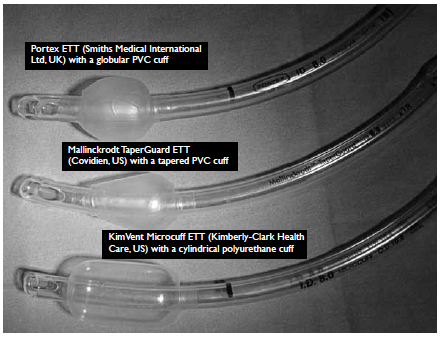
Asks, when a patient is on the ventilator, what causes a leak in the cuff? answer There are many causes to a cuff leak First, to clarify, it is rare that a leak within the cuff actually happens What happens most often is a leak around the cuff
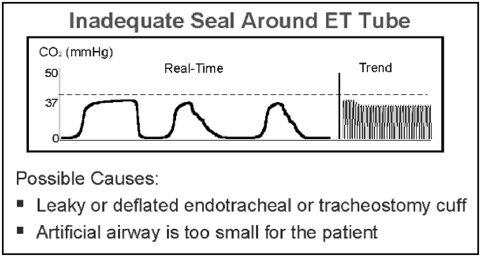
This leak around the cuff is usually caused by a tube that is too small, or by an overinflated cuff
When a tube is too small for the. Cuff leak from damage to an ett cuff, pilot line, pilot balloon, or valve can cause inadequate ventilation and presents a significant patient safety issue with an unsecure airway. The only test available to predict this complication is the cuff leak test (clt) Given the uncertainty of the clt's clinical utility, we conducted the comic (c uff leak test and airway o bstruction in m echanically ventilated ic u patients) pilot study to examine the feasibility of undertaking a larger trial.
The cuff leak test (clt) is an important tool to assess the risk of upper airway obstruction after extubation.does a modified clt approach have superi… An official american thoracic society/american college of chest physicians clinical practice guideline Liberation from mechanical ventilation in critically ill adults Rehabilitation protocols, ventilator liberation protocols, and cuff leak tests.
You need critical care registered nurses, nurses with icu experience who understand mechanical ventilation, tracheostomy management, airway emergencies, critical decision making
Document every incident, every cuff leak, every desaturation, every emergency intervention, document everything. Conduct the spontaneous breathing trial sbt settings set the ventilator to 5 cm h₂o 1, 2 fio₂ ≤ 0.40 (maintain current setting) 1, 3 duration
What is a cuff leak The cuff isn't inflated enough to seal the trachea, so tidal volume leaks around the tube What is the main ventilation problem caused by a cuff leak The patient doesn't receive the full tidal volume needed for adequate ventilation

What are common signs of a cuff leak
Gurgling sounds, hissing, or air escaping during. The ett cuff is deflated during mechanical ventilation breaths, and the clinician auscultates for air leaks around the tube Not enough volume is coming back out (often due to a leak or absent breaths) Leak in the ventilator circuit, cuff leak, or no spontaneous breaths on simv/cpap
Leak is inconsequential in the orally intubated intensive care patient If there is leak, the machine alarms, and the leak is sealed, one way or another How much leak is acceptable?
_ventilator_alarm_indicating_fresh_gas_flow_leak__b)_cuff_manometer_showing_low_cuff_pre.png)